
Kjeldahl vs. Dumas: Which Nitrogen Analyzer is Right for Your Lab?
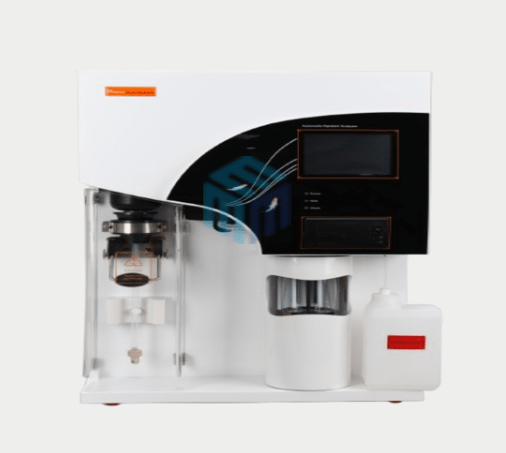
When it comes to determining protein content in food, feed, fertilizers, or pharmaceuticals, accurate nitrogen analysis is critical. Two dominant methods — the Kjeldahl method and the Dumas combustion method — offer laboratories robust ways to quantify nitrogen, from which protein content is calculated.
But how do you decide between a Kjeldahl nitrogen analyzer and a Dumas nitrogen analyzer? This blog explores their principles, advantages, limitations, and helps you determine the best fit for your lab’s needs.
The Basics: How Each Method Works
The Kjeldahl Method (Classic Wet Chemistry)
The Kjeldahl nitrogen determination, developed in 1883, involves three main steps:
-
Digestion: The sample is heated with concentrated sulfuric acid, breaking down organic matter and converting nitrogen to ammonium sulfate.
-
Distillation: Adding alkali releases ammonia, which is distilled into a receiving solution (often boric acid).
-
Titration: The captured ammonia is titrated to quantify nitrogen.
An automatic Kjeldahl nitrogen analyzer automates distillation and titration, increasing throughput and reducing manual labor.
The Dumas Method (Combustion)
The Dumas analyzer, named after Jean-Baptiste Dumas, burns the sample at ~900-1000°C in an oxygen-rich environment.
-
The nitrogen compounds convert to nitrogen gas (N₂), which is measured by a thermal conductivity detector.
-
This provides direct total nitrogen measurement without chemicals.
Dumas protein analyzers are often fully automated, handling sample loading, combustion, detection, and data output.
Key Differences Between Kjeldahl & Dumas
|
Feature |
Kjeldahl |
Dumas |
|
Type of analysis |
Chemical digestion |
High-temp combustion |
|
Detection |
Ammonia titration |
Direct N₂ measurement |
|
Time per sample |
~60-90 min (manual) |
~3-5 min |
|
Chemicals needed |
H₂SO₄, NaOH, catalyst |
Minimal (combustion gas only) |
|
Measures |
Organic nitrogen only |
Total nitrogen (incl. nitrate/nitrite) |
|
Sample size |
0.5 – 3 g |
~100-300 mg |
|
Automation options |
Semi/fully automatic |
Fully automatic standard |
Advantages of Kjeldahl Nitrogen Analyzers
✅ Widely accepted standard:
-
The Kjeldahl method is the official reference for many regulatory bodies (AOAC, ISO, FDA), especially for food and feed.
✅ High repeatability for organic nitrogen:
-
Excellent for samples like milk, cereals, meat, and feed.
✅ Versatile sample matrix:
-
Can handle fatty, high-fiber, or mineral-rich samples that might cause incomplete combustion in Dumas.
✅ Lower initial instrument cost:
-
A standard kjeldahl analyzer or semi-automatic system is generally cheaper than a Dumas unit.
Drawbacks of Kjeldahl Protein Analysis
Time-consuming:
-
Even with an automatic kjeldahl nitrogen analyzer, digestion takes at least 30-45 minutes.
Uses hazardous chemicals:
-
Concentrated sulfuric acid and catalysts (like selenium or copper) require careful handling and disposal.
Does not detect nitrate or nitrite nitrogen:
-
Only measures protein-derived (organic) nitrogen, missing inorganic forms.
Advantages of Dumas Nitrogen Analyzers
✅ Fast throughput:
-
Complete nitrogen analysis in ~3 minutes per sample, perfect for high-volume labs.
✅ No hazardous wet chemistry:
-
Safer and cleaner — requires only carrier gases (like helium, oxygen, CO₂).
✅ Automated sample handling:
-
Modern Dumas nitrogen analyzers can process 100+ samples unattended, reducing labor costs.
✅ Measures total nitrogen:
-
Useful in fertilizers or soil analysis where nitrates matter.
Drawbacks of Dumas Protein Analysis
🚫 Higher initial investment:
-
A typical Dumas nitrogen analyzer price is significantly more than a basic Kjeldahl system.
🚫 Cost of consumables:
-
Regular replacement of combustion tubes, reagents, and high-purity gases increases running costs.
🚫 Sensitivity to certain samples:
-
High salt or mineral samples can damage combustion tubes.
Regulatory & Industry Considerations
-
For food labeling, most global standards still reference the Kjeldahl method as the official procedure (especially for crude protein content).
-
The Dumas method is often approved as an alternative or equivalent, but confirmed with your certifying agency. In some dairy or meat export markets, regulators insist on Kjeldahl results.
Which Nitrogen Protein Analyzer is Right for Your Lab?
➡ Choose a Kjeldahl Analyzer if:
-
Your market requires compliance with AOAC 984.13, ISO 8968-1, or local Kjeldahl standards.
-
You handle tough samples (high fat, fiber, ash) where combustion is tricky.
-
Your lab does fewer samples, or you prefer lower instrument investment.
➡ Choose a Dumas Analyzer if:
-
You run large batches daily, where fast 3-5 min cycles save massive labor.
-
You need total nitrogen (including nitrates), such as for fertilizer or soil labs.
-
You want to eliminate acid, catalysts, and complex chemical disposal.
How to Decide: Kjeldahl vs. Dumas
Here’s a quick decision matrix for labs trying to choose their nitrogen protein analyzer:
|
If your lab... |
You should choose... |
|
Needs official regulatory compliance (AOAC, ISO) |
Kjeldahl nitrogen analyzer |
|
Processes hundreds of samples daily |
Dumas analyzer for speed |
|
Works mostly with organic protein matrices |
Kjeldahl remains robust |
|
Tests fertilizers with nitrates/nitrites |
Dumas nitrogen analyzer |
|
Wants minimal chemical handling & faster ROI |
Dumas Protein Analyzers |
|
Is on a tight equipment budget |
Manual/semi-auto Kjeldahl |
Expert Tip: Total vs. True Protein
Remember:
-
Kjeldahl protein analysis only measures organic nitrogen, which usually means protein nitrogen.
-
Dumas measures total nitrogen, so in feeds or fertilizers with added urea or nitrate, it might overestimate “protein.” Always adjust calculations or run parallel tests if your samples contain non-protein nitrogen sources.
Final Thoughts
Choosing between a Kjeldahl nitrogen analyzer and a Dumas nitrogen analyzer depends on what matters most for your lab. If your priority is compliance with official methods, or you often work with complex organic samples, Kjeldahl remains the trusted standard. If speed, automation, and minimal chemical handling are essential, Dumas is hard to beat. Many labs today actually rely on both—using Kjeldahl for regulatory checks and Dumas for high-throughput routine testing. By weighing your sample volumes, industry standards, and long-term operating costs, you’ll be well positioned to select the analyzer that delivers accurate, efficient, and reliable nitrogen results for years to come.

 English
 Arabic
 French
 Spanish
 Portuguese
 Deutsch
 Turkish
 Dutch
Dutch
 Italiano
 Russian
 Romaian
 Greek
Greek