


• Choosing Between Private Cloud and Public Cloud for Your Business


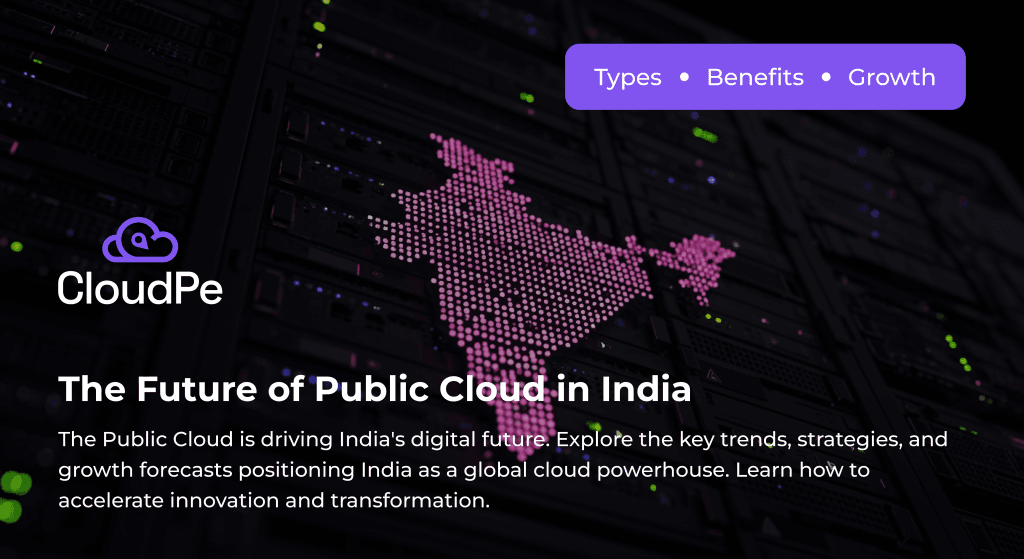
    When businesses consider cloud computing options, understanding the differences between private cloud vs public cloud is crucial. Both models provide scalable infrastructure and access to computing resources, but they differ in control, security, and cost. A private cloud is dedicated to a single organization, offering greater control over data, applications, and compliance requirements. It’s often preferred by enterprises with strict regulatory obligations or sensitive information that cannot be stored in shared environments.

    Private clouds allow organizations to customize their infrastructure to meet specific performance and security needs. They can integrate legacy systems, enforce stricter access controls, and manage workloads internally. However, this level of control comes with higher costs for hardware, maintenance, and specialized IT staff. For organizations with fluctuating workloads, these costs can be significant, especially when the infrastructure is underutilized during low-demand periods.

    Public clouds, on the other hand, are maintained by third-party providers and shared across multiple organizations. This setup offers lower upfront costs, faster deployment, and almost limitless scalability. Companies can access storage, processing power, and services on demand, paying only for what they use. Public clouds also benefit from frequent updates and broad geographic coverage, which can improve redundancy and disaster recovery capabilities without significant internal investment.

    When evaluating private cloud vs public cloud, businesses should also consider compliance and data sensitivity. Certain industries, such as finance and healthcare, may require private clouds to meet regulatory standards. Other sectors, like startups or companies with variable workloads, may find public clouds more practical due to cost-effectiveness and flexibility.

    Hybrid approaches are increasingly common, allowing organizations to keep critical workloads on private infrastructure while offloading less sensitive or highly variable tasks to the public cloud. This strategy balances control and scalability but requires careful management to ensure data integrity and smooth integration between environments.

    Ultimately, choosing the right cloud model depends on organizational priorities, regulatory requirements, and long-term IT strategy. While private clouds offer control and customization, the broad accessibility and efficiency of the public cloud make it a compelling option for many businesses seeking scalable infrastructure with minimal upfront investment.
    https://www.cloudpe.com/public-cloud-explained/
    Choosing Between Private Cloud and Public Cloud for Your Business When businesses consider cloud computing options, understanding the differences between private cloud vs public cloud is crucial. Both models provide scalable infrastructure and access to computing resources, but they differ in control, security, and cost. A private cloud is dedicated to a single organization, offering greater control over data, applications, and compliance requirements. It’s often preferred by enterprises with strict regulatory obligations or sensitive information that cannot be stored in shared environments. Private clouds allow organizations to customize their infrastructure to meet specific performance and security needs. They can integrate legacy systems, enforce stricter access controls, and manage workloads internally. However, this level of control comes with higher costs for hardware, maintenance, and specialized IT staff. For organizations with fluctuating workloads, these costs can be significant, especially when the infrastructure is underutilized during low-demand periods. Public clouds, on the other hand, are maintained by third-party providers and shared across multiple organizations. This setup offers lower upfront costs, faster deployment, and almost limitless scalability. Companies can access storage, processing power, and services on demand, paying only for what they use. Public clouds also benefit from frequent updates and broad geographic coverage, which can improve redundancy and disaster recovery capabilities without significant internal investment. When evaluating private cloud vs public cloud, businesses should also consider compliance and data sensitivity. Certain industries, such as finance and healthcare, may require private clouds to meet regulatory standards. Other sectors, like startups or companies with variable workloads, may find public clouds more practical due to cost-effectiveness and flexibility. Hybrid approaches are increasingly common, allowing organizations to keep critical workloads on private infrastructure while offloading less sensitive or highly variable tasks to the public cloud. This strategy balances control and scalability but requires careful management to ensure data integrity and smooth integration between environments. Ultimately, choosing the right cloud model depends on organizational priorities, regulatory requirements, and long-term IT strategy. While private clouds offer control and customization, the broad accessibility and efficiency of the public cloud make it a compelling option for many businesses seeking scalable infrastructure with minimal upfront investment. https://www.cloudpe.com/public-cloud-explained/
    WWW.CLOUDPE.COM
    Future of Public Cloud in India Explained: Types & Benefits
    Discover the potential of the public cloud in India. Understand its types and how it differs from private and hybrid clouds.
    0 Kommentare 0 Geteilt 589 Ansichten 0 Bewertungen
  • Next-Gen Web App Development: AI, Cloud & Serverless Explained

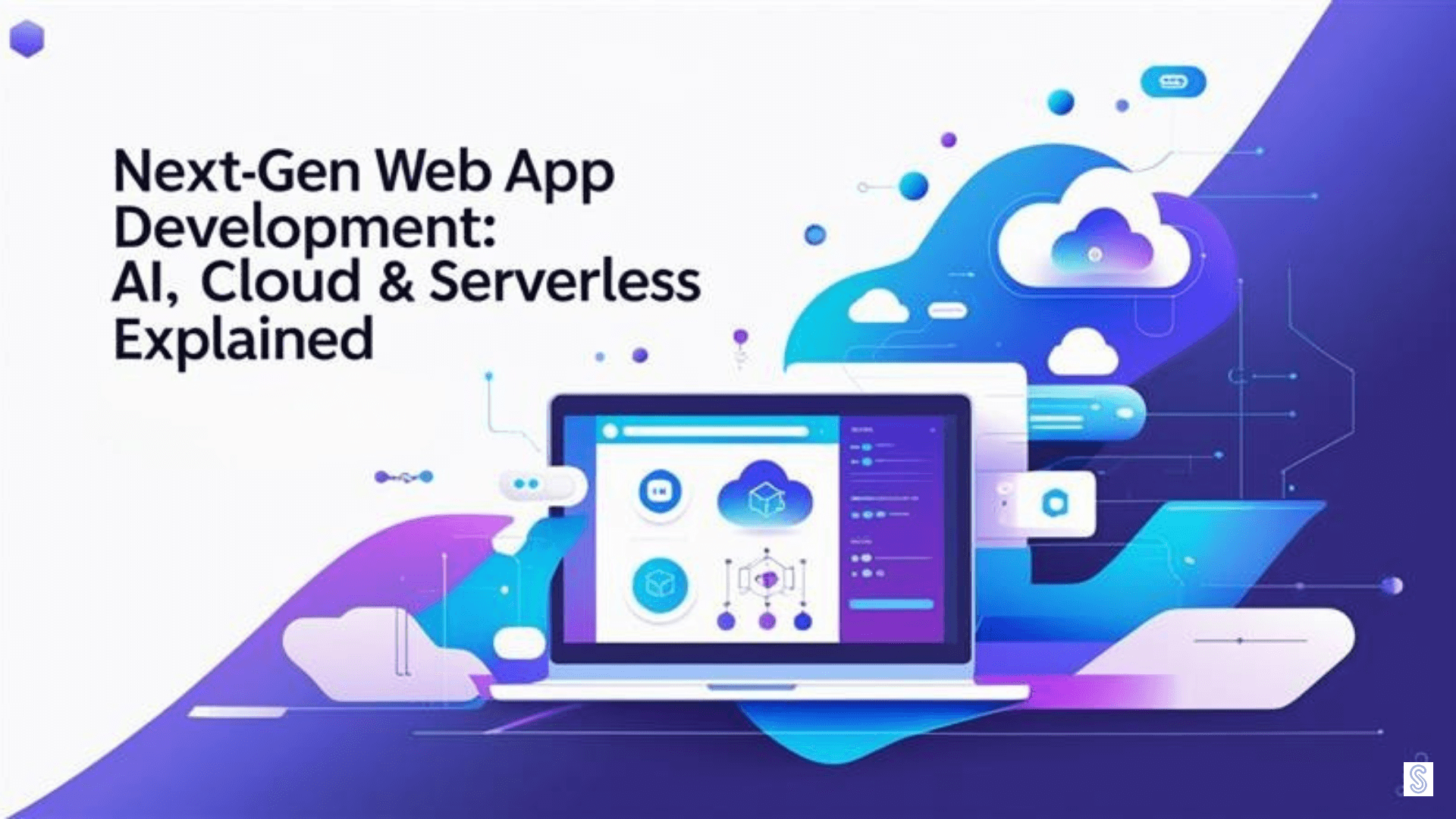
    In the rapidly evolving landscape of web development, next-generation web applications are at the forefront of innovation, driven by advancements in artificial intelligence, cloud computing, and serverless architecture. These technologies are reshaping how developers build, deploy, and scale applications, enabling them to create more efficient, responsive, and user-centric experiences. As businesses strive to meet the demands of modern consumers, understanding these components becomes crucial for leveraging their full potential. This article explores the key elements of next-gen web app development, comparing traditional methods with contemporary approaches, and offering insights into the future of this dynamic field.

    Explore our service:
    https://andswitchtech.com/web-development-company/

    #andswichtech #business #webapps #technology #webappsdevelopment #webservice #webdesign #techservice #appdevelopment #appservice #backenddevelopment #customwebdevelopment #frontenddevelopment


    Next-Gen Web App Development: AI, Cloud & Serverless Explained In the rapidly evolving landscape of web development, next-generation web applications are at the forefront of innovation, driven by advancements in artificial intelligence, cloud computing, and serverless architecture. These technologies are reshaping how developers build, deploy, and scale applications, enabling them to create more efficient, responsive, and user-centric experiences. As businesses strive to meet the demands of modern consumers, understanding these components becomes crucial for leveraging their full potential. This article explores the key elements of next-gen web app development, comparing traditional methods with contemporary approaches, and offering insights into the future of this dynamic field. Explore our service: https://andswitchtech.com/web-development-company/ #andswichtech #business #webapps #technology #webappsdevelopment #webservice #webdesign #techservice #appdevelopment #appservice #backenddevelopment #customwebdevelopment #frontenddevelopment
    0 Kommentare 0 Geteilt 750 Ansichten 0 Bewertungen
  • Who’s Leading the Global DAC High-Speed Copper Cable Market? Top 10 Players as CAGR Reaches 8.1% by 2034
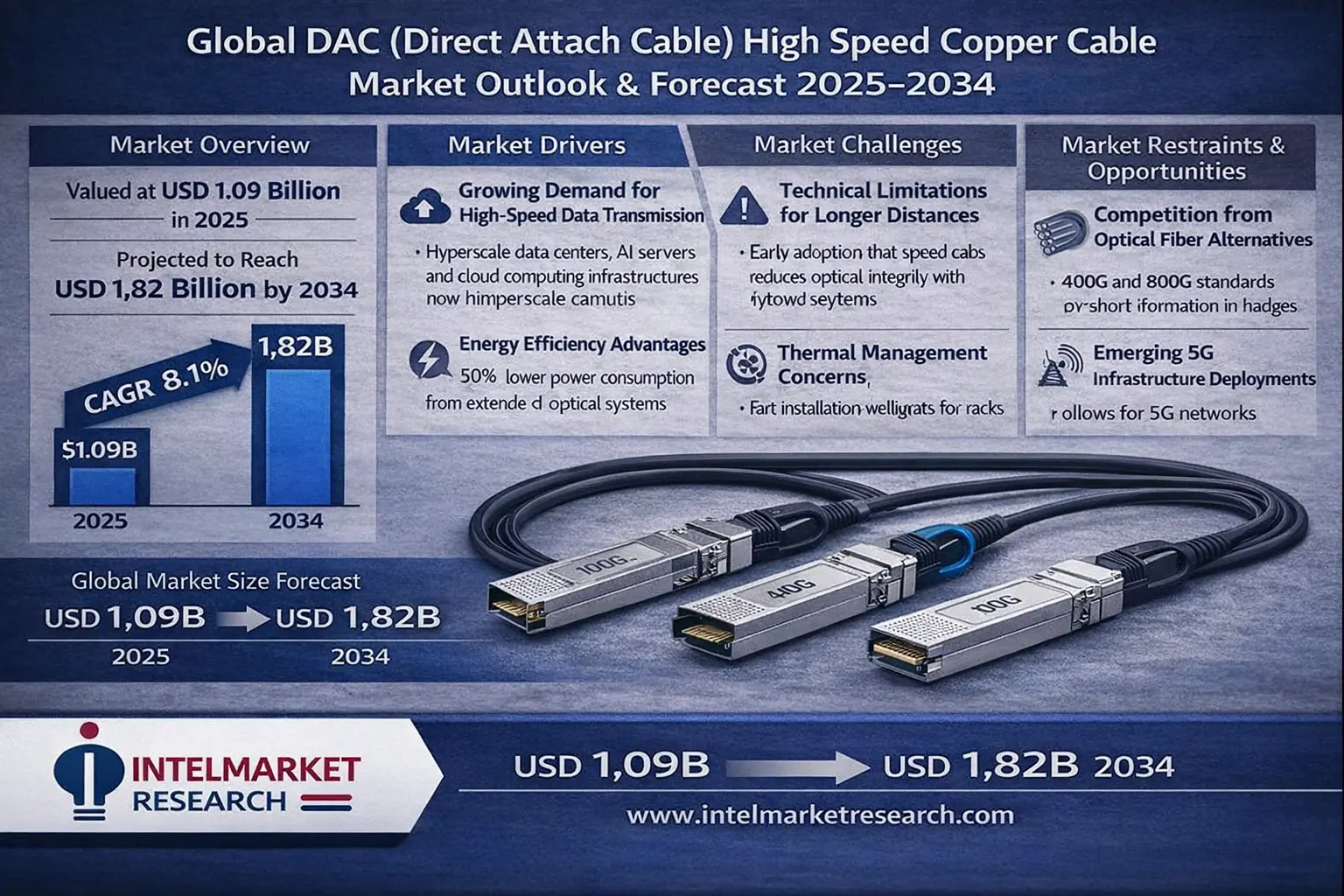
    According to a new report from Intel Market Research, Global DAC (Direct Attach Cable) High Speed Copper Cable market was valued at USD 1.09 billion in 2026 and is projected to reach USD 1.82 billion by 2034, growing at a CAGR of 8.1% during the forecast period (2026-2034). This significant growth is driven by the explosive expansion of hyperscale data centers, AI server deployments, and cloud computing infrastructure that demand high-bandwidth, low-latency interconnect solutions.
    What are DAC High Speed Copper Cables?
    Direct Attach Copper (DAC) cables are short-reach interconnect solutions that use twinax copper cabling to directly connect switches, servers, and storage devices within data center environments. These cables offer several advantages over optical alternatives, including:
    Lower power consumption (up to 50% less than optical solutions)
    Minimal latency for high-frequency trading and real-time applications
    Plug-and-play simplicity with no additional transceivers required
    Cost-effectiveness for short-distance connections
    DAC cables typically support distances from 0.5 to 7 meters and accommodate data rates from 10G through emerging 800G standards, making them ideal for rack-level and intra-data center connections where optical solutions would be cost-prohibitive.
    This comprehensive report provides a 360-degree view of the global DAC cable market, covering everything from market size and growth projections to competitive analysis, technological trends, and regional adoption patterns. The analysis helps businesses understand market dynamics, evaluate opportunities, and develop strategies to capitalize on this rapidly evolving sector.
    Download Sample Report: https://www.intelmarketresearch.com/download-free-sample/27751/dac-high-speed-copper-cable-market
    Who’s Leading the Global DAC High-Speed Copper Cable Market? Top 10 Players as CAGR Reaches 8.1% by 2034 According to a new report from Intel Market Research, Global DAC (Direct Attach Cable) High Speed Copper Cable market was valued at USD 1.09 billion in 2026 and is projected to reach USD 1.82 billion by 2034, growing at a CAGR of 8.1% during the forecast period (2026-2034). This significant growth is driven by the explosive expansion of hyperscale data centers, AI server deployments, and cloud computing infrastructure that demand high-bandwidth, low-latency interconnect solutions. What are DAC High Speed Copper Cables? Direct Attach Copper (DAC) cables are short-reach interconnect solutions that use twinax copper cabling to directly connect switches, servers, and storage devices within data center environments. These cables offer several advantages over optical alternatives, including: Lower power consumption (up to 50% less than optical solutions) Minimal latency for high-frequency trading and real-time applications Plug-and-play simplicity with no additional transceivers required Cost-effectiveness for short-distance connections DAC cables typically support distances from 0.5 to 7 meters and accommodate data rates from 10G through emerging 800G standards, making them ideal for rack-level and intra-data center connections where optical solutions would be cost-prohibitive. This comprehensive report provides a 360-degree view of the global DAC cable market, covering everything from market size and growth projections to competitive analysis, technological trends, and regional adoption patterns. The analysis helps businesses understand market dynamics, evaluate opportunities, and develop strategies to capitalize on this rapidly evolving sector. 📥 Download Sample Report: https://www.intelmarketresearch.com/download-free-sample/27751/dac-high-speed-copper-cable-market
    Download Free Sample : DAC Direct Attach Cable High Speed Copper Cable Market
    Free Sample Report Preview: DAC (Direct Attach Cable) High Speed Copper Cable Market Growth Analysis, Dynamics, Key Players and Innovations, Outlook and Forecast 2026-2034
    0 Kommentare 0 Geteilt 144 Ansichten 0 Bewertungen
  • Global DAC (Direct Attach Cable) High-Speed Copper Cable Market Trends and Forecast 2025–2034: CAGR of 8.1% with Key Players Analysis
    According to a new report from Intel Market Research, Global DAC (Direct Attach Cable) High Speed Copper Cable market was valued at USD 1.09 billion in 2026 and is projected to reach USD 1.82 billion by 2034, growing at a CAGR of 8.1% during the forecast period (2026-2034). This significant growth is driven by the explosive expansion of hyperscale data centers, AI server deployments, and cloud computing infrastructure that demand high-bandwidth, low-latency interconnect solutions.
    What are DAC High Speed Copper Cables?
    Direct Attach Copper (DAC) cables are short-reach interconnect solutions that use twinax copper cabling to directly connect switches, servers, and storage devices within data center environments. These cables offer several advantages over optical alternatives, including:
    Lower power consumption (up to 50% less than optical solutions)
    Minimal latency for high-frequency trading and real-time applications
    Plug-and-play simplicity with no additional transceivers required
    Cost-effectiveness for short-distance connections
    DAC cables typically support distances from 0.5 to 7 meters and accommodate data rates from 10G through emerging 800G standards, making them ideal for rack-level and intra-data center connections where optical solutions would be cost-prohibitive.
    This comprehensive report provides a 360-degree view of the global DAC cable market, covering everything from market size and growth projections to competitive analysis, technological trends, and regional adoption patterns. The analysis helps businesses understand market dynamics, evaluate opportunities, and develop strategies to capitalize on this rapidly evolving sector.
    Download Sample Report: https://www.intelmarketresearch.com/download-free-sample/27751/dac-high-speed-copper-cable-market
    Global DAC (Direct Attach Cable) High-Speed Copper Cable Market Trends and Forecast 2025–2034: CAGR of 8.1% with Key Players Analysis According to a new report from Intel Market Research, Global DAC (Direct Attach Cable) High Speed Copper Cable market was valued at USD 1.09 billion in 2026 and is projected to reach USD 1.82 billion by 2034, growing at a CAGR of 8.1% during the forecast period (2026-2034). This significant growth is driven by the explosive expansion of hyperscale data centers, AI server deployments, and cloud computing infrastructure that demand high-bandwidth, low-latency interconnect solutions. What are DAC High Speed Copper Cables? Direct Attach Copper (DAC) cables are short-reach interconnect solutions that use twinax copper cabling to directly connect switches, servers, and storage devices within data center environments. These cables offer several advantages over optical alternatives, including: Lower power consumption (up to 50% less than optical solutions) Minimal latency for high-frequency trading and real-time applications Plug-and-play simplicity with no additional transceivers required Cost-effectiveness for short-distance connections DAC cables typically support distances from 0.5 to 7 meters and accommodate data rates from 10G through emerging 800G standards, making them ideal for rack-level and intra-data center connections where optical solutions would be cost-prohibitive. This comprehensive report provides a 360-degree view of the global DAC cable market, covering everything from market size and growth projections to competitive analysis, technological trends, and regional adoption patterns. The analysis helps businesses understand market dynamics, evaluate opportunities, and develop strategies to capitalize on this rapidly evolving sector. 📥 Download Sample Report: https://www.intelmarketresearch.com/download-free-sample/27751/dac-high-speed-copper-cable-market
    0 Kommentare 0 Geteilt 148 Ansichten 0 Bewertungen
  • Which Regions Will Dominate the Digital Engineering Solutions Market by 2034?
    According to a new report from Intel Market Research, Global Digital Engineering Solutions market was valued at USD 1.38 billion in 2026 and is projected to reach USD 2.04 billion by 2034, growing at a CAGR of 5.8% during the forecast period (2026-2034). This growth is driven by increasing adoption of smart infrastructure projects, demand for cost optimization in engineering workflows, and government initiatives promoting digital transformation across industries.
    What are Digital Engineering Solutions?
    Digital Engineering Solutions encompass a suite of advanced technologies including Building Information Modeling (BIM), digital twins, cloud computing, and artificial intelligence that streamline engineering processes across industries. These solutions enable seamless collaboration, data-driven decision-making, and automation across design, construction, and operational phases of projects. Leading players like Siemens, ABB, and Schneider Electric are expanding their portfolios with AI-powered predictive analytics and IoT-enabled monitoring systems, exemplified by Siemens' 2023 launch of its Xcelerator platform which combines BIM with real-time performance data.
    This report provides comprehensive insights into the global Digital Engineering Solutions market covering market size, competitive landscape, development trends, key drivers and challenges, SWOT analysis, and more. The analysis helps businesses understand industry competition while offering strategies for profitability enhancement and market positioning.
    In short, this report is essential reading for engineering firms, technology providers, investors, consultants, and all stakeholders in the digital transformation of engineering processes.
    Download Sample Report: https://www.intelmarketresearch.com/download-free-sample/27975/digital-engineering-solutions-market
    Which Regions Will Dominate the Digital Engineering Solutions Market by 2034? According to a new report from Intel Market Research, Global Digital Engineering Solutions market was valued at USD 1.38 billion in 2026 and is projected to reach USD 2.04 billion by 2034, growing at a CAGR of 5.8% during the forecast period (2026-2034). This growth is driven by increasing adoption of smart infrastructure projects, demand for cost optimization in engineering workflows, and government initiatives promoting digital transformation across industries. What are Digital Engineering Solutions? Digital Engineering Solutions encompass a suite of advanced technologies including Building Information Modeling (BIM), digital twins, cloud computing, and artificial intelligence that streamline engineering processes across industries. These solutions enable seamless collaboration, data-driven decision-making, and automation across design, construction, and operational phases of projects. Leading players like Siemens, ABB, and Schneider Electric are expanding their portfolios with AI-powered predictive analytics and IoT-enabled monitoring systems, exemplified by Siemens' 2023 launch of its Xcelerator platform which combines BIM with real-time performance data. This report provides comprehensive insights into the global Digital Engineering Solutions market covering market size, competitive landscape, development trends, key drivers and challenges, SWOT analysis, and more. The analysis helps businesses understand industry competition while offering strategies for profitability enhancement and market positioning. In short, this report is essential reading for engineering firms, technology providers, investors, consultants, and all stakeholders in the digital transformation of engineering processes. 📥 Download Sample Report: https://www.intelmarketresearch.com/download-free-sample/27975/digital-engineering-solutions-market
    Download Free Sample : Digital Engineering Solutions Market
    Free Sample Report Preview: Digital Engineering Solutions Market Growth Analysis, Dynamics, Key Players and Innovations, Outlook and Forecast 2026-2034
    0 Kommentare 0 Geteilt 101 Ansichten 0 Bewertungen
  • What Makes the Vending Machine Management Tools Market a High-Growth Opportunity?
    According to a new report from Intel Market Research, Global Vending Machine Management Tools market was valued at USD 594 million in 2025 and is projected to reach USD 1,064 million by 2034, growing at a strong CAGR of 8.7% during the forecast period (2026–2034). This growth is fueled by increasing automation in retail, adoption of cashless payment systems, and the need for intelligent inventory management solutions.
    What are Vending Machine Management Tools?
    Vending Machine Management Tools are digital platforms designed to remotely monitor, control, and optimize vending machine operations. These solutions provide real-time data analytics for inventory tracking, predictive maintenance alerts, sales performance insights, and cashless transaction processing. By integrating IoT sensors and cloud computing, they enable operators to reduce operational costs while increasing revenue through data-driven decision making across multiple machine locations.
    This report offers comprehensive analysis of the global Vending Machine Management Tools market, covering all critical aspects from market size and competitive landscape to growth drivers, technological innovations, and regional dynamics. The study helps stakeholders understand market opportunities while providing strategic insights to enhance operational efficiency and profitability.
    The competitive analysis section details market positioning of key players, helping businesses benchmark their performance. For investors and strategists, this report identifies high-growth segments and emerging technological trends shaping the future of automated retail management solutions.
    Download Sample Report: https://www.intelmarketresearch.com/download-free-sample/27957/vending-machine-management-tools-market
    What Makes the Vending Machine Management Tools Market a High-Growth Opportunity? According to a new report from Intel Market Research, Global Vending Machine Management Tools market was valued at USD 594 million in 2025 and is projected to reach USD 1,064 million by 2034, growing at a strong CAGR of 8.7% during the forecast period (2026–2034). This growth is fueled by increasing automation in retail, adoption of cashless payment systems, and the need for intelligent inventory management solutions. What are Vending Machine Management Tools? Vending Machine Management Tools are digital platforms designed to remotely monitor, control, and optimize vending machine operations. These solutions provide real-time data analytics for inventory tracking, predictive maintenance alerts, sales performance insights, and cashless transaction processing. By integrating IoT sensors and cloud computing, they enable operators to reduce operational costs while increasing revenue through data-driven decision making across multiple machine locations. This report offers comprehensive analysis of the global Vending Machine Management Tools market, covering all critical aspects from market size and competitive landscape to growth drivers, technological innovations, and regional dynamics. The study helps stakeholders understand market opportunities while providing strategic insights to enhance operational efficiency and profitability. The competitive analysis section details market positioning of key players, helping businesses benchmark their performance. For investors and strategists, this report identifies high-growth segments and emerging technological trends shaping the future of automated retail management solutions. 📥 Download Sample Report: https://www.intelmarketresearch.com/download-free-sample/27957/vending-machine-management-tools-market
    0 Kommentare 0 Geteilt 178 Ansichten 0 Bewertungen
  • What's AWS in Cloud computing?

    AWS( Amazon Web Services) is the world’s most comprehensive and astronomically espoused pall platform. possessed by Amazon, it provides over 200 completely featured services — ranging from simple storehouse to advanced artificial intelligence — from data centers encyclopedically.
    rather than buying and maintaining physical waiters, you" rent" these coffers over the internet and pay only for what you use.
    How AWS Works
    Think of AWS like a mileage company( like electricity or water). You do not make a power factory to turn on a light; you plug into the grid and pay for the kilowatts you consume. Also, with AWS
    On- Demand You can" spin up" a garçon in twinkles.
    https://www.sevenmentor.com/cloud-computing-course-in-bangalore
    What's AWS in Cloud computing? AWS( Amazon Web Services) is the world’s most comprehensive and astronomically espoused pall platform. possessed by Amazon, it provides over 200 completely featured services — ranging from simple storehouse to advanced artificial intelligence — from data centers encyclopedically. rather than buying and maintaining physical waiters, you" rent" these coffers over the internet and pay only for what you use. How AWS Works Think of AWS like a mileage company( like electricity or water). You do not make a power factory to turn on a light; you plug into the grid and pay for the kilowatts you consume. Also, with AWS On- Demand You can" spin up" a garçon in twinkles. https://www.sevenmentor.com/cloud-computing-course-in-bangalore
    Cloud Computing Course in Bangalore | SevenMentor
    Become a specialist in the networking field by taking up the best hands-on practical sessions of the Cloud Computing Course in Bangalore developed by IT experts.
    0 Kommentare 0 Geteilt 42 Ansichten 0 Bewertungen
  • The global Fintech as a Service (FaaS) market is undergoing a period of rapid transformation, driven by the increasing demand for seamless digital financial solutions, regulatory modernization, and advancements in cloud computing and open banking ecosystems. According to Kings Research, the global FaaS market was valued at USD 356.20 billion in 2024 and is projected to grow from USD 410.49 billion in 2025 to USD 1,257.98 billion by 2032, exhibiting a CAGR of 17.35% during the forecast period.

    Fintech as a Service is an integrated technology delivery model where third-party providers offer financial technology infrastructure, APIs, and platforms that enable businesses—both financial and non-financial—to integrate financial services into their operations without building complex systems from scratch.
    This model supports services like digital payments, banking, lending, insurance, wealth management, and compliance, all delivered through cloud-based frameworks.

    As industries rapidly digitize, the demand for agile, compliant, and scalable financial technologies is reshaping traditional finance. Fintech as a Service allows organizations to launch innovative financial products quickly while maintaining security, compliance, and customer trust.

    Get Full Detailed PDF Report: https://www.kingsresearch.com/report/fintech-as-a-service-market-2892

    Market Dynamics
    Key Drivers
    1. Rapid Digital Transformation in Financial Services
    Digital transformation across financial institutions, e-commerce, and enterprises is the most significant driver of FaaS adoption.
    The global shift to mobile-first banking and payments, accelerated by the pandemic, has increased the demand for modular financial solutions that can be embedded into customer ecosystems.
    FaaS providers empower banks and fintech startups to reduce time-to-market, cut infrastructure costs, and enhance customer experiences with ready-to-integrate financial APIs.

    2. Growth of Embedded Finance
    Embedded finance—the integration of financial services within non-financial platforms—is one of the most powerful trends fueling FaaS adoption.
    E-commerce platforms, ride-sharing apps, and even healthcare companies are embedding services such as buy-now-pay-later (BNPL), insurance, and instant payments directly into their applications using FaaS infrastructure.
    This model enables companies to create new revenue streams while improving user engagement and retention.

    3. Expansion of Open Banking Initiatives
    The growing implementation of open banking regulations in regions such as Europe, the UK, and Asia-Pacific has accelerated the FaaS ecosystem.
    By allowing third-party developers to access financial data through secure APIs, open banking fosters innovation, competition, and transparency.
    FaaS providers play a pivotal role in enabling this API-driven environment, offering secure data aggregation, payment initiation, and identity verification solutions.

    4. Rising Adoption of Cloud and API-based Architecture
    FaaS operates on the backbone of cloud computing and API-based integration, enabling scalability, cost-effectiveness, and agility.
    Organizations are migrating from legacy systems to cloud-native, microservices-based infrastructures that facilitate real-time transactions and personalized customer engagement.
    The combination of AI, machine learning (ML), and blockchain within these systems enhances fraud detection, credit scoring, and predictive analytics.

    5. Growing Fintech Startups and Venture Capital Investment
    The fintech startup ecosystem continues to expand globally, supported by strong venture capital inflows.
    Startups increasingly rely on FaaS platforms to launch compliant, full-scale financial products without building infrastructure from scratch.
    This democratization of financial technology is accelerating financial inclusion, especially in emerging markets across Asia, Africa, and Latin America.


    The global Fintech as a Service (FaaS) market is undergoing a period of rapid transformation, driven by the increasing demand for seamless digital financial solutions, regulatory modernization, and advancements in cloud computing and open banking ecosystems. According to Kings Research, the global FaaS market was valued at USD 356.20 billion in 2024 and is projected to grow from USD 410.49 billion in 2025 to USD 1,257.98 billion by 2032, exhibiting a CAGR of 17.35% during the forecast period. Fintech as a Service is an integrated technology delivery model where third-party providers offer financial technology infrastructure, APIs, and platforms that enable businesses—both financial and non-financial—to integrate financial services into their operations without building complex systems from scratch. This model supports services like digital payments, banking, lending, insurance, wealth management, and compliance, all delivered through cloud-based frameworks. As industries rapidly digitize, the demand for agile, compliant, and scalable financial technologies is reshaping traditional finance. Fintech as a Service allows organizations to launch innovative financial products quickly while maintaining security, compliance, and customer trust. Get Full Detailed PDF Report: https://www.kingsresearch.com/report/fintech-as-a-service-market-2892 Market Dynamics Key Drivers 1. Rapid Digital Transformation in Financial Services Digital transformation across financial institutions, e-commerce, and enterprises is the most significant driver of FaaS adoption. The global shift to mobile-first banking and payments, accelerated by the pandemic, has increased the demand for modular financial solutions that can be embedded into customer ecosystems. FaaS providers empower banks and fintech startups to reduce time-to-market, cut infrastructure costs, and enhance customer experiences with ready-to-integrate financial APIs. 2. Growth of Embedded Finance Embedded finance—the integration of financial services within non-financial platforms—is one of the most powerful trends fueling FaaS adoption. E-commerce platforms, ride-sharing apps, and even healthcare companies are embedding services such as buy-now-pay-later (BNPL), insurance, and instant payments directly into their applications using FaaS infrastructure. This model enables companies to create new revenue streams while improving user engagement and retention. 3. Expansion of Open Banking Initiatives The growing implementation of open banking regulations in regions such as Europe, the UK, and Asia-Pacific has accelerated the FaaS ecosystem. By allowing third-party developers to access financial data through secure APIs, open banking fosters innovation, competition, and transparency. FaaS providers play a pivotal role in enabling this API-driven environment, offering secure data aggregation, payment initiation, and identity verification solutions. 4. Rising Adoption of Cloud and API-based Architecture FaaS operates on the backbone of cloud computing and API-based integration, enabling scalability, cost-effectiveness, and agility. Organizations are migrating from legacy systems to cloud-native, microservices-based infrastructures that facilitate real-time transactions and personalized customer engagement. The combination of AI, machine learning (ML), and blockchain within these systems enhances fraud detection, credit scoring, and predictive analytics. 5. Growing Fintech Startups and Venture Capital Investment The fintech startup ecosystem continues to expand globally, supported by strong venture capital inflows. Startups increasingly rely on FaaS platforms to launch compliant, full-scale financial products without building infrastructure from scratch. This democratization of financial technology is accelerating financial inclusion, especially in emerging markets across Asia, Africa, and Latin America.
    0 Kommentare 0 Geteilt 175 Ansichten 0 Bewertungen
  • Digital Traffic Safety Solution Market Growth Analysis, Dynamics, Key Players, Innovations & Forecast 2026-2034
    According to a new report from Intel Market Research, Global Digital Traffic Safety Solution market was valued at USD 967 million in 2026 and is projected to reach USD 2.41 billion by 2034, growing at a remarkable CAGR of 14.2% during the forecast period (2026–2034). This growth trajectory reflects the accelerating adoption of intelligent transportation technologies across urban and highway infrastructure worldwide.
    What Are Digital Traffic Safety Solutions?
    Digital traffic safety solutions represent an integrated ecosystem of technologies combining artificial intelligence (AI), Internet of Things (IoT) networks, cloud computing platforms, and big data analytics to revolutionize road safety management. These systems enable real-time traffic monitoring, predictive incident detection, automated warning systems, and vehicle-to-infrastructure coordination through advanced ITS (Intelligent Transportation Systems) and V2I (Vehicle-to-Infrastructure) communication protocols.
    Key applications span traffic flow optimization, autonomous vehicle integration, regulatory enforcement, and emergency response coordination. Modern platforms now incorporate machine learning algorithms that analyze over 200 traffic parameters to predict accident risks with 92% accuracy, according to recent field tests.
    This comprehensive report delivers essential market intelligence covering technological innovations, competitive strategies, regulatory landscapes, and implementation challenges across global markets. The analysis provides stakeholders with actionable insights into:
    • Market size projections and growth patterns
    • Technology adoption curves across regions
    • Strategic partnerships shaping the industry
    • Cost-benefit analyses of deployment models
    • Emerging opportunities in smart city ecosystems
    Download FREE Sample Report: https://www.intelmarketresearch.com/download-free-sample/26162/digital-traffic-safety-solution-market
    Digital Traffic Safety Solution Market Growth Analysis, Dynamics, Key Players, Innovations & Forecast 2026-2034 According to a new report from Intel Market Research, Global Digital Traffic Safety Solution market was valued at USD 967 million in 2026 and is projected to reach USD 2.41 billion by 2034, growing at a remarkable CAGR of 14.2% during the forecast period (2026–2034). This growth trajectory reflects the accelerating adoption of intelligent transportation technologies across urban and highway infrastructure worldwide. What Are Digital Traffic Safety Solutions? Digital traffic safety solutions represent an integrated ecosystem of technologies combining artificial intelligence (AI), Internet of Things (IoT) networks, cloud computing platforms, and big data analytics to revolutionize road safety management. These systems enable real-time traffic monitoring, predictive incident detection, automated warning systems, and vehicle-to-infrastructure coordination through advanced ITS (Intelligent Transportation Systems) and V2I (Vehicle-to-Infrastructure) communication protocols. Key applications span traffic flow optimization, autonomous vehicle integration, regulatory enforcement, and emergency response coordination. Modern platforms now incorporate machine learning algorithms that analyze over 200 traffic parameters to predict accident risks with 92% accuracy, according to recent field tests. This comprehensive report delivers essential market intelligence covering technological innovations, competitive strategies, regulatory landscapes, and implementation challenges across global markets. The analysis provides stakeholders with actionable insights into: • Market size projections and growth patterns • Technology adoption curves across regions • Strategic partnerships shaping the industry • Cost-benefit analyses of deployment models • Emerging opportunities in smart city ecosystems 📥 Download FREE Sample Report: https://www.intelmarketresearch.com/download-free-sample/26162/digital-traffic-safety-solution-market
    0 Kommentare 0 Geteilt 26 Ansichten 0 Bewertungen
  • Tired of dealing with complex server issues and scattered data systems? With Kindlebit’s cloud infrastructure management services, you get a smarter, more secure way to manage, monitor, and scale your IT environment. Our experts ensure reliable performance, reduced downtime, and real-time visibility—so your team can focus on growth, not glitches.

    Clean migration
    24/7 monitoring
    Scalable cloud setup

    Experience the shift from cluttered hardware to seamless cloud control.
    Visit: https://kindlebit.com/cloud-computing-services/
    Tired of dealing with complex server issues and scattered data systems? With Kindlebit’s cloud infrastructure management services, you get a smarter, more secure way to manage, monitor, and scale your IT environment. Our experts ensure reliable performance, reduced downtime, and real-time visibility—so your team can focus on growth, not glitches. ✅ Clean migration ✅ 24/7 monitoring ✅ Scalable cloud setup Experience the shift from cluttered hardware to seamless cloud control. Visit: https://kindlebit.com/cloud-computing-services/
    0 Kommentare 0 Geteilt 69 Ansichten 0 Bewertungen
  • Take My CompTIA Exam for Me: Stress-Free Online Exam Assistance

    For IT professionals looking to launch or grow their careers in the tech sector, CompTIA certifications have become a crucial first step. Employers around the world highly value these tests because they verify knowledge in areas like networking, cybersecurity, cloud computing, and IT fundamentals. But the stress of passing these tests and the preparation required can frequently be too much to handle. In order to guarantee a more seamless and stress-free exam experience, a lot of candidates have turned to Take My CompTIA Exam For Me services for professional assistance. Read More - https://comptiaexamhelp.blogspot.com/2025/08/take-my-comptia-exam-for-me-stress-free.html
    Take My CompTIA Exam for Me: Stress-Free Online Exam Assistance For IT professionals looking to launch or grow their careers in the tech sector, CompTIA certifications have become a crucial first step. Employers around the world highly value these tests because they verify knowledge in areas like networking, cybersecurity, cloud computing, and IT fundamentals. But the stress of passing these tests and the preparation required can frequently be too much to handle. In order to guarantee a more seamless and stress-free exam experience, a lot of candidates have turned to Take My CompTIA Exam For Me services for professional assistance. Read More - https://comptiaexamhelp.blogspot.com/2025/08/take-my-comptia-exam-for-me-stress-free.html
    COMPTIAEXAMHELP.BLOGSPOT.COM
    Take My CompTIA Exam for Me: Stress-Free Online Exam Assistance
    For IT professionals looking to launch or grow their careers in the tech sector, CompTIA certifications have become a crucial first step. Em...
    0 Kommentare 0 Geteilt 49 Ansichten 0 Bewertungen
  • Discover why public cloud computing is the preferred choice for startups and enterprises moving to the cloud.
    visit us : https://www.intelicscloud.com/what-is-public-cloud-computing/
    Discover why public cloud computing is the preferred choice for startups and enterprises moving to the cloud. visit us : https://www.intelicscloud.com/what-is-public-cloud-computing/
    0 Kommentare 0 Geteilt 28 Ansichten 0 Bewertungen
Weitere Ergebnisse