


EV Battery Thermal Design Must Keep Pace with Faster Production Lines
Battery innovation is not only changing vehicle performance. It is also changing how battery packs are manufactured. As EV demand grows worldwide, manufacturers are under pressure to increase production volumes while maintaining consistent quality and safety standards.
For battery engineers, this creates a unique challenge. Thermal protection materials must not only perform under extreme conditions but also fit smoothly into modern assembly processes. A solution that is difficult to install can create production delays, increase labor requirements, and introduce variability across battery packs.
Many battery modules today include cooling systems, structural reinforcements, sensors, and complex wiring layouts. Finding space for thermal protection materials within these crowded designs is becoming increasingly difficult. Engineers need insulation solutions that fit into compact spaces without adding unnecessary weight or complexity.
An EV battery thermal insulation pad can help address these challenges by providing thermal separation while supporting efficient integration. Lightweight materials are particularly valuable because they help manufacturers maintain energy efficiency targets without compromising safety objectives.
Installation efficiency has also become an important selection criterion. Adhesive-backed thermal materials can simplify assembly procedures and improve positioning accuracy inside battery modules. This is especially beneficial for large-scale manufacturing operations where repeatability and consistency are essential.
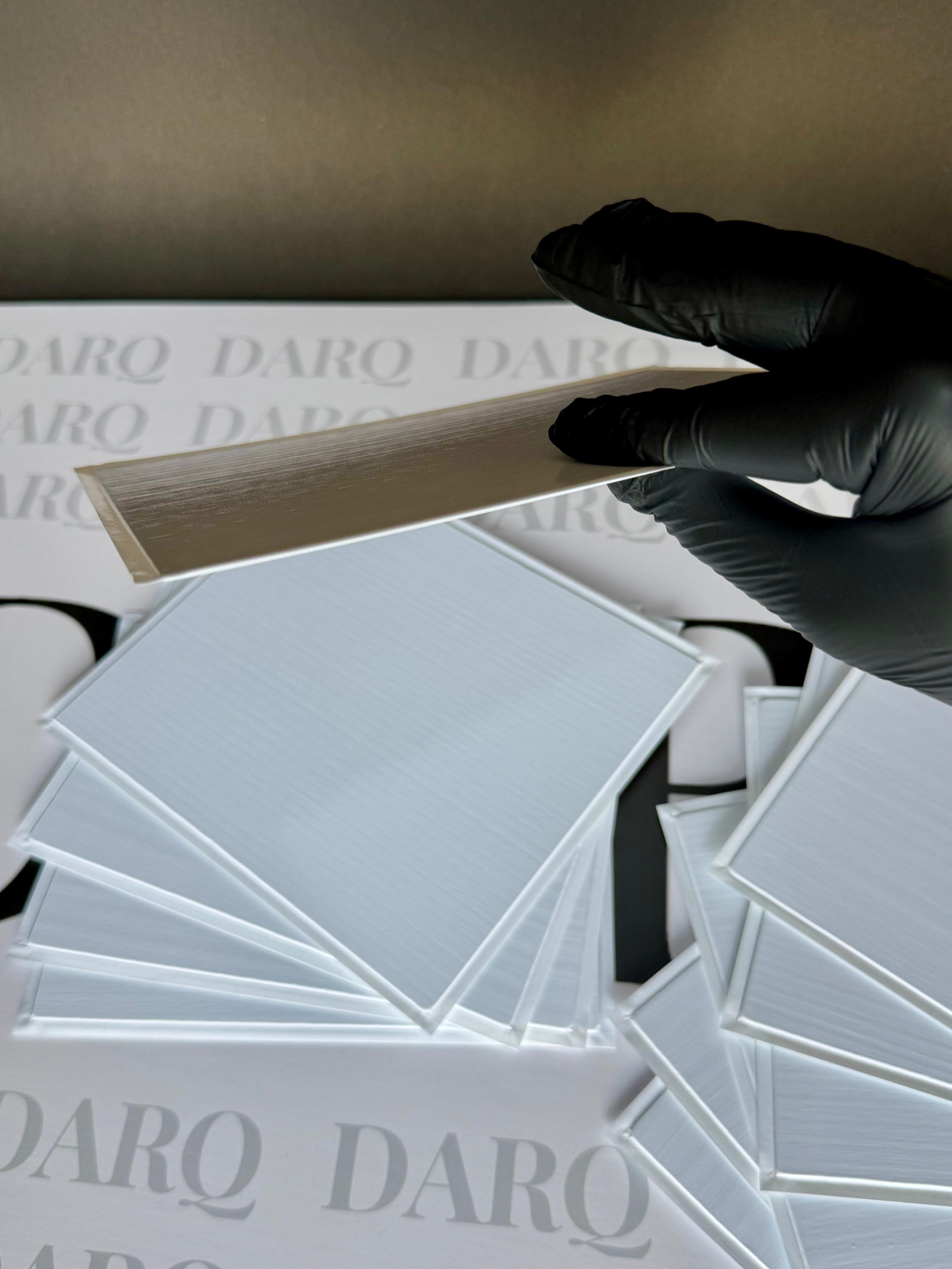
Darq Industries supports EV battery manufacturers seeking thermal materials that align with both engineering and production requirements. Their ultra-thin solutions offer temperature resistance up to 1000°C and are available in single-side and double-side adhesive configurations. These options can help simplify installation while supporting compact battery pack architectures.
Looking ahead, battery systems will continue becoming more powerful and space constrained. This means thermal protection materials must evolve beyond traditional insulation concepts. Future solutions will need to support automation, faster assembly, and increasingly demanding safety requirements.
Manufacturers are also paying closer attention to overall battery lifecycle performance. Thermal materials must remain effective throughout years of operation while maintaining their structural integrity under changing environmental conditions. Reliability is becoming just as important as thermal resistance.
A well-designed EV battery adhesive insulation pad can contribute to both manufacturing efficiency and thermal protection goals. By combining easier installation with effective thermal separation, engineers can address multiple design challenges using a single integrated solution.
The future of EV battery manufacturing will depend on how effectively companies balance safety, performance, and production efficiency. Thermal protection materials that support all three objectives are likely to become an increasingly important part of next-generation battery development strategies.
Visit our website for more information - https://www.darqindia.com/product-page/ev-battery-thermal-runaway-protection-pad-1000c
Battery innovation is not only changing vehicle performance. It is also changing how battery packs are manufactured. As EV demand grows worldwide, manufacturers are under pressure to increase production volumes while maintaining consistent quality and safety standards.
For battery engineers, this creates a unique challenge. Thermal protection materials must not only perform under extreme conditions but also fit smoothly into modern assembly processes. A solution that is difficult to install can create production delays, increase labor requirements, and introduce variability across battery packs.
Many battery modules today include cooling systems, structural reinforcements, sensors, and complex wiring layouts. Finding space for thermal protection materials within these crowded designs is becoming increasingly difficult. Engineers need insulation solutions that fit into compact spaces without adding unnecessary weight or complexity.
An EV battery thermal insulation pad can help address these challenges by providing thermal separation while supporting efficient integration. Lightweight materials are particularly valuable because they help manufacturers maintain energy efficiency targets without compromising safety objectives.
Installation efficiency has also become an important selection criterion. Adhesive-backed thermal materials can simplify assembly procedures and improve positioning accuracy inside battery modules. This is especially beneficial for large-scale manufacturing operations where repeatability and consistency are essential.
Darq Industries supports EV battery manufacturers seeking thermal materials that align with both engineering and production requirements. Their ultra-thin solutions offer temperature resistance up to 1000°C and are available in single-side and double-side adhesive configurations. These options can help simplify installation while supporting compact battery pack architectures.
Looking ahead, battery systems will continue becoming more powerful and space constrained. This means thermal protection materials must evolve beyond traditional insulation concepts. Future solutions will need to support automation, faster assembly, and increasingly demanding safety requirements.
Manufacturers are also paying closer attention to overall battery lifecycle performance. Thermal materials must remain effective throughout years of operation while maintaining their structural integrity under changing environmental conditions. Reliability is becoming just as important as thermal resistance.
A well-designed EV battery adhesive insulation pad can contribute to both manufacturing efficiency and thermal protection goals. By combining easier installation with effective thermal separation, engineers can address multiple design challenges using a single integrated solution.
The future of EV battery manufacturing will depend on how effectively companies balance safety, performance, and production efficiency. Thermal protection materials that support all three objectives are likely to become an increasingly important part of next-generation battery development strategies.
Visit our website for more information - https://www.darqindia.com/product-page/ev-battery-thermal-runaway-protection-pad-1000c
EV Battery Thermal Design Must Keep Pace with Faster Production Lines
Battery innovation is not only changing vehicle performance. It is also changing how battery packs are manufactured. As EV demand grows worldwide, manufacturers are under pressure to increase production volumes while maintaining consistent quality and safety standards.
For battery engineers, this creates a unique challenge. Thermal protection materials must not only perform under extreme conditions but also fit smoothly into modern assembly processes. A solution that is difficult to install can create production delays, increase labor requirements, and introduce variability across battery packs.
Many battery modules today include cooling systems, structural reinforcements, sensors, and complex wiring layouts. Finding space for thermal protection materials within these crowded designs is becoming increasingly difficult. Engineers need insulation solutions that fit into compact spaces without adding unnecessary weight or complexity.
An EV battery thermal insulation pad can help address these challenges by providing thermal separation while supporting efficient integration. Lightweight materials are particularly valuable because they help manufacturers maintain energy efficiency targets without compromising safety objectives.
Installation efficiency has also become an important selection criterion. Adhesive-backed thermal materials can simplify assembly procedures and improve positioning accuracy inside battery modules. This is especially beneficial for large-scale manufacturing operations where repeatability and consistency are essential.
Darq Industries supports EV battery manufacturers seeking thermal materials that align with both engineering and production requirements. Their ultra-thin solutions offer temperature resistance up to 1000°C and are available in single-side and double-side adhesive configurations. These options can help simplify installation while supporting compact battery pack architectures.
Looking ahead, battery systems will continue becoming more powerful and space constrained. This means thermal protection materials must evolve beyond traditional insulation concepts. Future solutions will need to support automation, faster assembly, and increasingly demanding safety requirements.
Manufacturers are also paying closer attention to overall battery lifecycle performance. Thermal materials must remain effective throughout years of operation while maintaining their structural integrity under changing environmental conditions. Reliability is becoming just as important as thermal resistance.
A well-designed EV battery adhesive insulation pad can contribute to both manufacturing efficiency and thermal protection goals. By combining easier installation with effective thermal separation, engineers can address multiple design challenges using a single integrated solution.
The future of EV battery manufacturing will depend on how effectively companies balance safety, performance, and production efficiency. Thermal protection materials that support all three objectives are likely to become an increasingly important part of next-generation battery development strategies.
Visit our website for more information - https://www.darqindia.com/product-page/ev-battery-thermal-runaway-protection-pad-1000c
0 Yorumlar
0 hisse senetleri
76 Views
0 önizleme

 English
 Arabic
 French
 Spanish
 Portuguese
 Deutsch
 Dutch
Dutch
 Italiano
 Russian
 Romaian
 Portuguese (Brazil)
 Greek
Greek