


Forecast for pharmaceutical primary inner packaging market 2026-2034
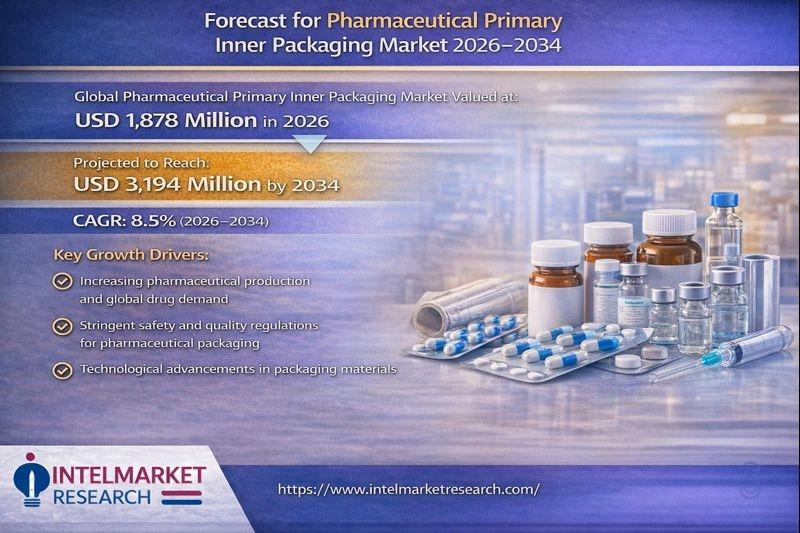
According to a new report from Intel Market Research, Global Pharmaceutical Primary Inner Packaging market was valued at USD 1,878 million in 2026 and is projected to reach USD 3,194 million by 2034, growing at a CAGR of 8.5% during the forecast period (2026-2034). This growth is driven by increasing pharmaceutical production, stringent safety regulations, and technological advancements in packaging materials.
What is Pharmaceutical Primary Inner Packaging?
Pharmaceutical Primary Inner Packaging refers to materials and containers that directly contact pharmaceutical products like drugs, vaccines, and biologics. These solutions protect medications from contamination, moisture, light, and physical damage while maintaining product stability and efficacy. Common formats include glass vials, plastic bottles, blister packs, and metal containers - each offering unique advantages for different drug formulations.
The report provides comprehensive analysis of this critical market segment, covering everything from macro industry trends to micro-level competitive dynamics. It examines market drivers, challenges, innovations, and regional variations to help stakeholders make informed strategic decisions.
Given the pharmaceutical industry's stringent quality requirements and growing regulatory scrutiny, this report is essential reading for packaging manufacturers, drug developers, supply chain managers, and investors seeking opportunities in this specialized sector.
Download Sample Report: https://www.intelmarketresearch.com/download-free-sample/24741/pharmaceutical-primary-inner-packaging-market
Key Market Drivers
1. Surging Demand for Biologics and Injectable Drugs
The biologics revolution is transforming pharmaceutical packaging needs. With biologics now accounting for 35% of new drug approvals, there's growing demand for specialized primary packaging that can maintain sterility and stability of these sensitive therapies. Pre-filled syringes and advanced vial systems are seeing particularly strong adoption, growing at 9.1% annually through 2030.
2. Evolving Regulatory Compliance Requirements
Stringent FDA and EMA regulations govern pharmaceutical packaging with re
According to a new report from Intel Market Research, Global Pharmaceutical Primary Inner Packaging market was valued at USD 1,878 million in 2026 and is projected to reach USD 3,194 million by 2034, growing at a CAGR of 8.5% during the forecast period (2026-2034). This growth is driven by increasing pharmaceutical production, stringent safety regulations, and technological advancements in packaging materials.
What is Pharmaceutical Primary Inner Packaging?
Pharmaceutical Primary Inner Packaging refers to materials and containers that directly contact pharmaceutical products like drugs, vaccines, and biologics. These solutions protect medications from contamination, moisture, light, and physical damage while maintaining product stability and efficacy. Common formats include glass vials, plastic bottles, blister packs, and metal containers - each offering unique advantages for different drug formulations.
The report provides comprehensive analysis of this critical market segment, covering everything from macro industry trends to micro-level competitive dynamics. It examines market drivers, challenges, innovations, and regional variations to help stakeholders make informed strategic decisions.
Given the pharmaceutical industry's stringent quality requirements and growing regulatory scrutiny, this report is essential reading for packaging manufacturers, drug developers, supply chain managers, and investors seeking opportunities in this specialized sector.
Download Sample Report: https://www.intelmarketresearch.com/download-free-sample/24741/pharmaceutical-primary-inner-packaging-market
Key Market Drivers
1. Surging Demand for Biologics and Injectable Drugs
The biologics revolution is transforming pharmaceutical packaging needs. With biologics now accounting for 35% of new drug approvals, there's growing demand for specialized primary packaging that can maintain sterility and stability of these sensitive therapies. Pre-filled syringes and advanced vial systems are seeing particularly strong adoption, growing at 9.1% annually through 2030.
2. Evolving Regulatory Compliance Requirements
Stringent FDA and EMA regulations govern pharmaceutical packaging with re
Forecast for pharmaceutical primary inner packaging market 2026-2034
According to a new report from Intel Market Research, Global Pharmaceutical Primary Inner Packaging market was valued at USD 1,878 million in 2026 and is projected to reach USD 3,194 million by 2034, growing at a CAGR of 8.5% during the forecast period (2026-2034). This growth is driven by increasing pharmaceutical production, stringent safety regulations, and technological advancements in packaging materials.
What is Pharmaceutical Primary Inner Packaging?
Pharmaceutical Primary Inner Packaging refers to materials and containers that directly contact pharmaceutical products like drugs, vaccines, and biologics. These solutions protect medications from contamination, moisture, light, and physical damage while maintaining product stability and efficacy. Common formats include glass vials, plastic bottles, blister packs, and metal containers - each offering unique advantages for different drug formulations.
The report provides comprehensive analysis of this critical market segment, covering everything from macro industry trends to micro-level competitive dynamics. It examines market drivers, challenges, innovations, and regional variations to help stakeholders make informed strategic decisions.
Given the pharmaceutical industry's stringent quality requirements and growing regulatory scrutiny, this report is essential reading for packaging manufacturers, drug developers, supply chain managers, and investors seeking opportunities in this specialized sector.
📥 Download Sample Report: https://www.intelmarketresearch.com/download-free-sample/24741/pharmaceutical-primary-inner-packaging-market
Key Market Drivers
1. Surging Demand for Biologics and Injectable Drugs
The biologics revolution is transforming pharmaceutical packaging needs. With biologics now accounting for 35% of new drug approvals, there's growing demand for specialized primary packaging that can maintain sterility and stability of these sensitive therapies. Pre-filled syringes and advanced vial systems are seeing particularly strong adoption, growing at 9.1% annually through 2030.
2. Evolving Regulatory Compliance Requirements
Stringent FDA and EMA regulations govern pharmaceutical packaging with re
0 Commenti
0 condivisioni
3 Views
0 Anteprima

 English
 Arabic
 French
 Spanish
 Portuguese
 Deutsch
 Turkish
 Dutch
Dutch
 Russian
 Romaian
 Portuguese (Brazil)
 Greek
Greek